What's new with EU tyre labelling?
From May 2021, Regulation (EU) 2020/740 applies, changing the way tyres are labelled. Find out more about the meaning of the tyre label and what’s new about the tyre energy rating.
Goodyear has worked closely with the European Institutions on the updated tyre label to promote industry innovation and to help consumers make more informed decisions about their tyres. We believe that the new EU tyre label will allow consumers to obtain more relevant and comparable information on tyre parameters and empower end-users to make an informed choice when purchasing new tyres. The new EU tyre label also provides more detailed information available online – making it easier for consumers and professionals to make the right choice. We prepared a more detailed tyre label explanation for you in the following sections.
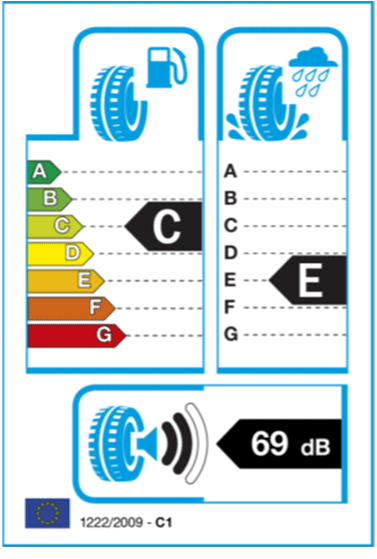
Old vs. new:
A comparison of the EU tyre labels
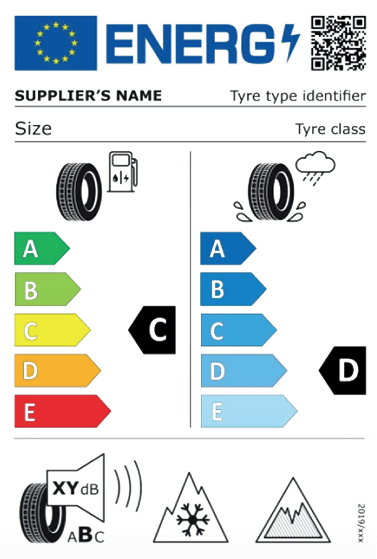
The EU tyre label and efficiency classes come in a new design and slightly changed due to a newly formed scale. The former standard label only showed tyre classes with regard to rolling resistance, wet grip and external rolling noise. The new EU tyre label holds additional information on tyre performances in snow and ice weather conditions. The scale of the label classes for wet grip and rolling resistance now have 5 instead of 7 classes, designated with the letters A to E.
Wet grip rating
‘Wet grip’ is the tyre’s ability to stick to the road in wet conditions. The EU rating focuses only on one aspect of wet grip – the wet braking performance of the tyre. The performance is graded between class A and class E. Tyres with a high wet grip rating will stop more quickly on wet roads when full brakes are applied. In an emergency situation, a few metres can make all the difference.
Note: You should always respect the recommended stopping distances when driving.
*When measured according to the test methods set out in Regulation EC 1222/2009. Braking distances may vary according to driving conditions and other influencing factors.
Fuel efficiency
Did you know that tyres account for up to 20% of your vehicle’s fuel consumption? Choosing tyres with a high fuel efficiency rating will give you more miles from your tank and lower your CO2 emissions. Depending on the tyre’s rolling resistance, its fuel efficiency will range from class A, which indicates the best fuel economy all the way through to class E, delivering the worst fuel economy. Between classes, fuel consumption increases by approximately 0.1 litre for every 100 km driven. Simply put, fuel-efficient tyres require less energy to roll. This ultimately translates into less fuel used and you’ll also be reducing your environmental impact!
Noise rating
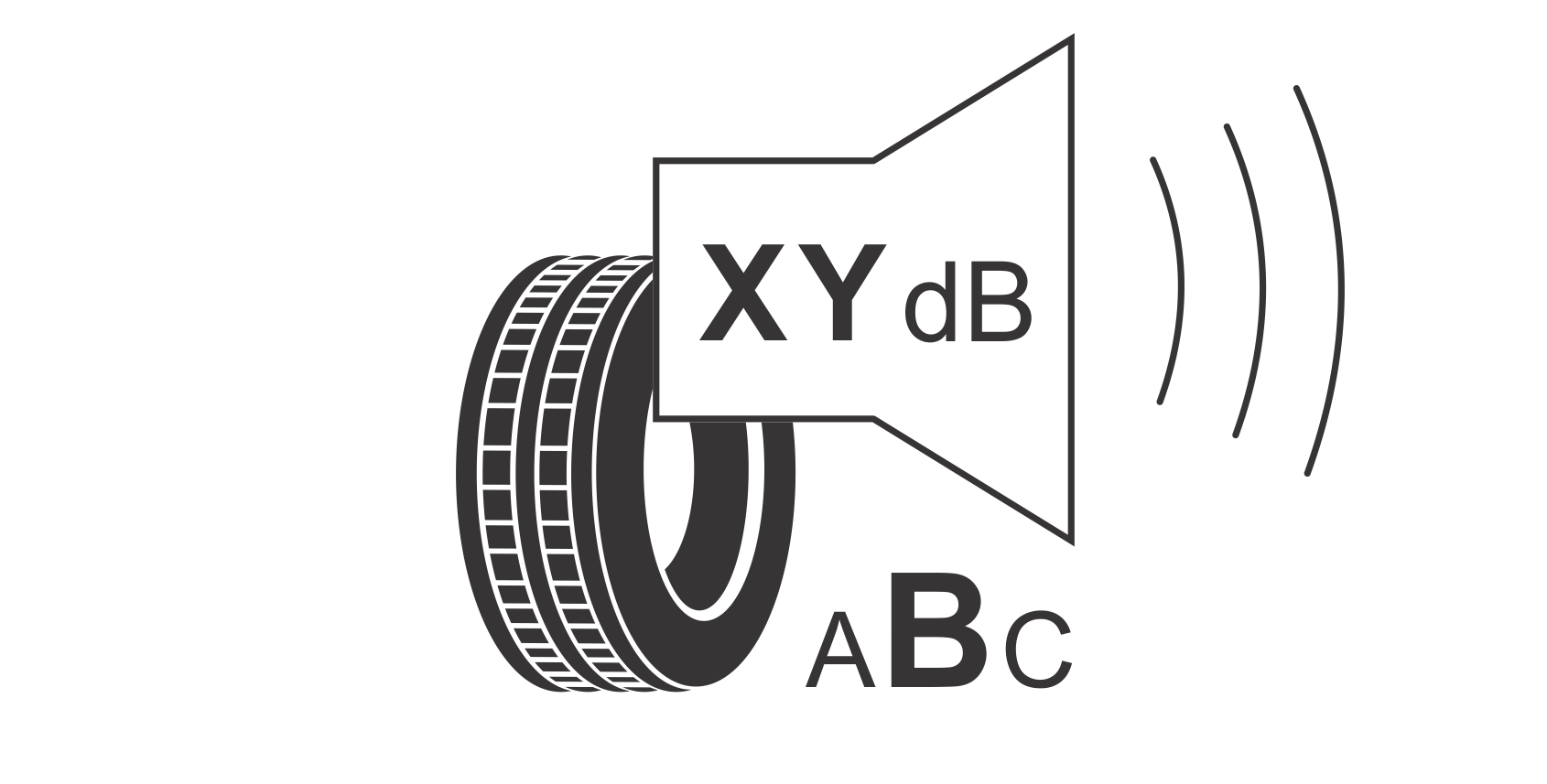
The EU tyre ratings also consider the exterior noise a tyre generates while driving. By choosing a tyre with a good noise rating you can lower the impact of your driving on the surrounding environment. The noise level is sorted into class A, B or C. The rolling noise of the tyre is measured in decibels and the exact number is shown in the bottom part of the label. Tyres with a low noise level have between 67 and 71 dB. The highest level shows sound waves in between 72 and 77 dB. An increase of just a few decibels represents a big difference in noise levels. In fact, a difference of 3dB doubles the amount of external noise the tyre produces.
An explanation of the new EU tyre label
There is some newly designed information to find on the updated version of the EU tyre label.
Here’s the new design of the EU tyre label explained in a nutshell:

The QR code:
The inclusion of a QR code provides easy access to product details in the public part of the EU product database. The code can be scanned and grants access to product information sheets and european tyre labels.
The tyre type identifier:
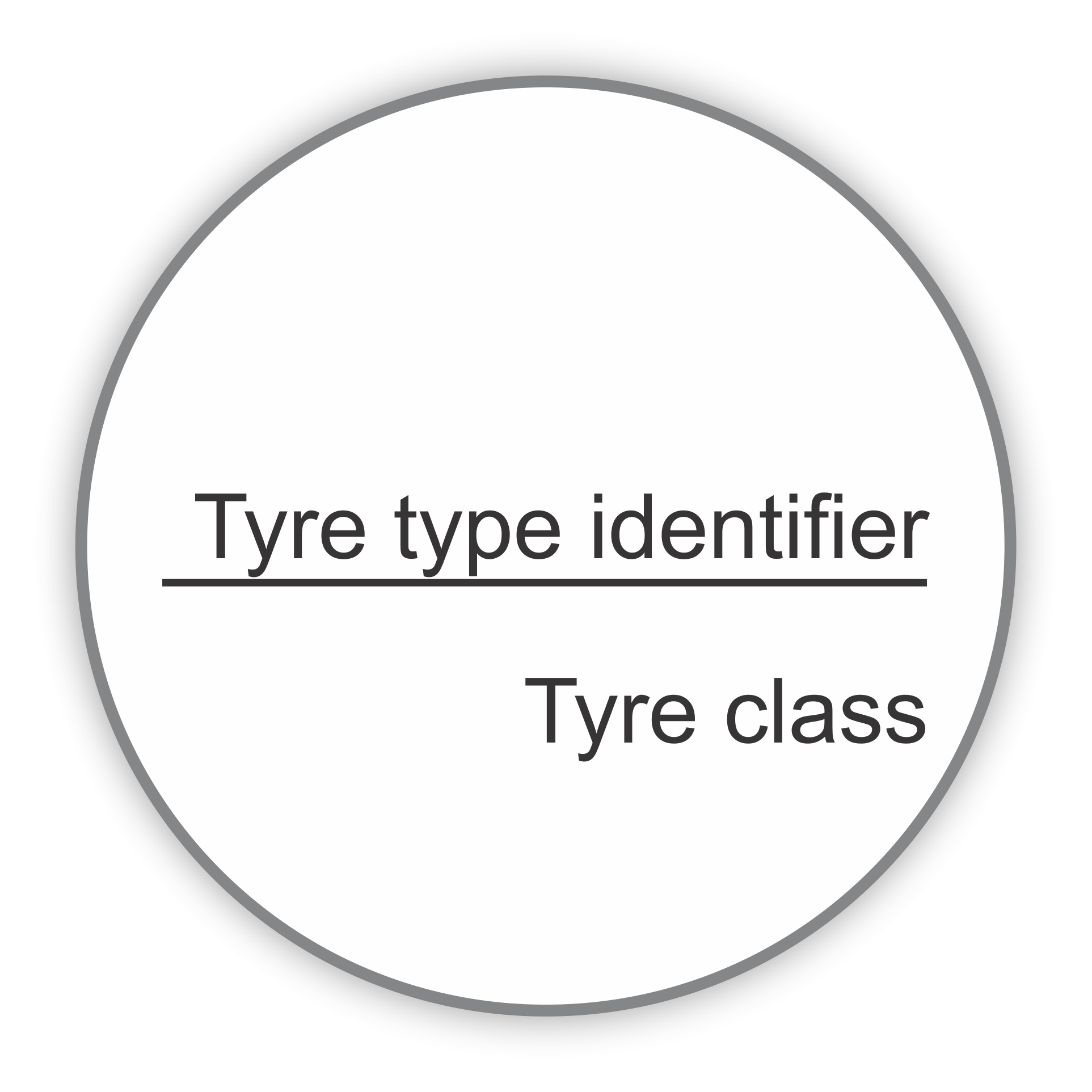
Each tyre product must identify through a unique tyre designation.

The snow tyre icon:
There are two new options for including an additional icon. The snow tyre icon shows, if a tyre is suitable for severe snow conditions. It bears a three-peak mountain snowflake symbol (3PMSF) that is incorporated in the sidewall of such tyres. The pictogram is granted by measuring the braking distance of a car from 25 mph on compacted snow or by measuring the traction force of a tyre. For a truck, the pictogram is granted by measuring the acceleration performance of a tyre. Snow grip performance in general is tested in accordance with Annex 7 to UNECE Regulation No 117. The regulation describes in detail such factors as test surface, air temperature, testing vehicle, load, pressure, speed, and many more.

The ice tyre icon:
The second new icon features a symbol of an ice stalagmite and indicates that a tyre provides a shorter braking distance on ice covered roads in winter. Information on ice grip performance will be based on the ISO standard (ISO 19447), which is expected to be published in July 2021. For tyres meeting the technical requirements, the ice grip pictogram will be included on the new EU tyre label of a C1 tyre (passenger car tyre), which satisfies the minimum ice grip index values set out in that ISO standard. The pictogram is granted by measuring the braking distance of a car from 20mph on pure ice. The standards for C2 and C3 tyres are still to be defined.
Take a look at our tyres
Goodyear fully supports these revisions of the Tyre Labeling Regulation and is happy to provide its customers with more relevant information on tyre parameters when making a tyre purchase. We are firm believers that it is our mission to promote tyres with the best safety for consumers, which are fuel saving and stand for environmental protection throughout the whole tyre industry. Our experts will gladly advise you for the most perfect fit of tyres for your car and needs!
Summary of changes
- Reduced rating levels: Fuel efficiency and wet grip are now rated in 5 levels (from A to E) instead of 7
- External rolling noise is rated from A (lowest noise level) to C (highest noise level)
- The new EU tyre label provides a QR code that can be scanned to get access to product details
- Each tyre label must show a unique identifier
- The new snow tyre icon shows if a tyre is suitable for severe snow conditions
- A new ice grip icon indicates if a C1 tyre (passenger car tyre) satisfies the minimum ice grip index values set out in the new ISO 19447 standard
New tyre Label Regulation FAQ
- What is the tyre label?
Introduced in 2012, the tyre label provides consumers across Europe with essential information on fuel efficiency, safety, and noise by detailing the tyres’ rolling resistance, wet grip, and external rolling noise. By using this common scale, the aim of the EU tyre label is to make it easier for consumers to make an informed choice when buying new tyres. As of the 1stof May 2021, the revised tyre label will come into effect. - Why is the European Commission changing the existing tyre label?
With the revised tyre label regulation, the European Commission aims to increase safety as well as economic and environmental efficiency of road transport by promoting fuel‐efficient, safe tyres with low noise levels. The new label also includes new information for consumers indicating if a tyre is suitable for use in severe snow conditions or in extreme ice conditions. - What is Goodyear’s position on the revised tyre label regulation?
Goodyear supports revisions of the tyre Labeling Regulation and is committed to fulfilling all obligations regarding its implementation. We believe that the new EU tyre label will allow consumers to obtain more relevant and comparable information on tyre parameters and empower end-users to make an informed choice when purchasing new tyres. It will also help promote tyres which provide the best safety and environmental performances. Furthermore, the European Product Database for Energy Labelling (EPREL) with registrations of all tyres available in the EU will contribute to improving the information flow between tyre manufacturers and authorities, and ultimately enhance market surveillance. - When is the new EU tyre label coming into effect?
The new tyre label regulation will apply from May 1, 2021. Until then, the current tyre label remains in use. - Do all tyres fall under the scope of the new tyre label regulation?
The new tyre label regulation applies only to new passenger car tyres (C1 tyres), light commercial vehicle tyres (C2 tyres) and heavy vehicle tyres (C3 tyres). - Which tyres are excluded from the new tyre label regulation?
The new tyre label regulation applies only to new passenger car tyres (C1 tyres), light commercial vehicle tyres (C2 tyres) and heavy vehicle tyres (C3 tyres). The following categories are currently excluded from the scope of the new regulation: retreadedtyres, off-roadtyres, racingtyres, studdedtyres, temporary use sparetyres, tyres designed to be fitted on vehicles registered for the first time before 1 October 1990, tyres whose speed rating is less than 80 km/h, tyres whose nominal rim diameter does not exceed 254 mm or is 635 mm or more. - What is changing in the EU tyre label?
• The new regulation will apply also to truck tyres, so it will comprise tyre classes C1 (passenger car tyres), C2 (light commercial vehicle tyres) and C3 (heavy commercial vehicle tyres).
• Under the new regulation, in addition to the standard label (rolling resistance, wet grip and external rolling noise), there are also options for including an icon indicating if a tyre is suitable forsevere snow conditionsand another new icon for grip onice. tyres suitable for severe snow conditions bear the three-peak mountain snowflake symbol (3PMSF) that is present on the sidewall of such tyres. The C1 (passenger car) tyres fulfilling the requirements of the upcoming ISO standard for ice performance will feature a new symbol that represents an ice stalagmite.
• A minor change has been implemented regarding the label classes for rolling resistance and wet grip: current empty or unoccupied classes for C1 and C2 tyres have been filled and redundant label classes (which are no longer permitted according to limit values) have been deleted to form a new scale which has only 5 classes (A to E).
• In the bottom part, thenoise class (A, B or C)will be always indicated in addition to the value of external noise level in decibels.
• Under the new regulation, tyre labels need to also include the name of the tyre manufacturer, as well as a unique identifier, the tyre type identifier.
• Finally, the tyre label will have to include the QR code, which is intended to link directly to the European Product Database for Energy Labelling (EPREL). - Do tyre dealers need to relabel tyres on stock that were placed on the market before May 1, 2021?
All C1, C2 and C3 tyres produced from the 1stof May 2021 and necessarily placed on the market after this date must bear the new label. However, there is no obligation for dealers to relabel tyres that are on stock after the 1stof May if these tyres were placed on the market before that date, so before the new tyre label regulation came into effect. In other words, tyres placed on the market prior to the 1stof May can remain with the old label until they are sold. Therefore, both the old and the new label may be found on tyres at sales points even after the 1stof May 2021, depending on the date of placing these tyres on the market. - What are the obligations of tyre manufactures in relation to the new tyre label regulation?
tyre manufactures have the choice of either putting a sticker on the tyre tread or including a printed label with each delivery of batch of identical tyres to the dealer. Goodyear will ensure that all tyres delivered to tyre dealers will bear stickers with the label. For all tyres, the label information must also be included on the manufacturer’s web pages, brochures and technical promotional documentation given to the buyer.tyre manufacturers must also enter the information required by the new tyre label regulation into the product database (EPREL) before placing a tyre on the market from the 1stof May 2021. - What is EPREL?
EPREL is the European Product Database for Energy Labelling which was set up to provide important energy efficiency information to consumers. Its purpose is to enhance market surveillance activities and enforcement in the EU. It is a legal requirement for suppliers (manufacturers, importers or authorized representatives) of products covered by the EU Energy Labelling Regulations (e.g. household appliances) to upload information about their products into the database before placing these products on the market in the EU. According to the new tyre label regulation, tyre manufacturers will also need to enter the information into the product database before placing a tyre on the EU market from the 1stof May 2021. - Does the tyre label provide exhaustive information on tyre performance?
The label provides basic information on threeessential aspects of a tyre’s performance (fuel efficiency, wet grip and external rolling noise) to help consumers make an informed choice. However, the label does not cover all parameters related to the overall performance of a tyre. By comparison, independent surveys carried out by automotive magazines cover on average fifteenaspects of tyre performance, while Goodyear analyses over fiftycriteria, including aquaplaning resistance, dry handling, dry braking, high speed stability, milage and many more. Therefore, the label cannot replace quality testing byspecialized laboratories or information provided by manufacturers and others, which use a wider range of criteria to assess tyre performance.


